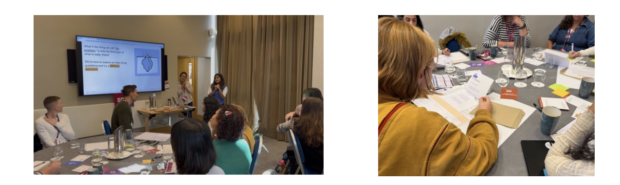
In September, we ran a workshop at Service Design in Government (SDinGov) in Edinburgh, Scotland called Designing with Strengths, Not Deficits. It was a practical session exploring how we frame people in public services, and what changes when we look beyond need, risk or failure.
The idea comes from strengths-based practice in social work. The Strengths Perspective was first formally articulated in 1989, building on work with adults with psychiatric disabilities and challenging approaches that focused mainly on people's problems or limitations. At its heart, strengths-based practice asks us to see people as resourceful and capable, even in difficult circumstances. It does not mean ignoring harm, risk, need or safeguarding. Those things still matter, but they should not be the whole story.
This way of thinking feels especially relevant to public services. In the UK and around the world, governments are responding to complex needs and constrained resources. We can already see examples of this thinking in justice.
For instance, HMPPS's existing Building Choices programme supports people to develop skills and work towards future-focused goals, without defining them solely by offence labels. Although separate from our work, it reflects the wider shift we are interested in exploring: how can we recognise people's strengths alongside their needs and build support around their potential?
Building on our our experience in local government, social care and working with people with lived experience, we shared two case studies that showed strengths-based thinking in practice. Both demonstrated how services can build on what people already know, do and value, creating conditions for them to bring their strengths and motivation into a programme.
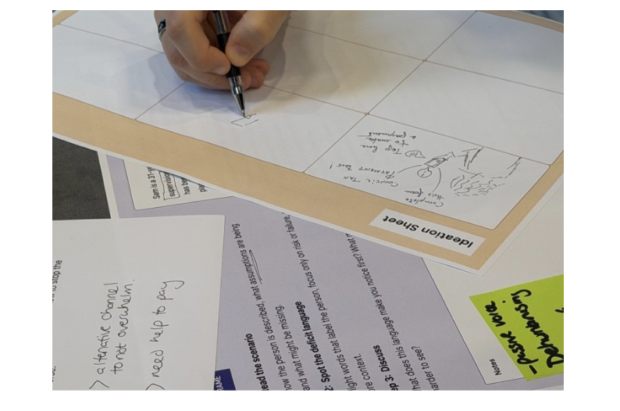
We then introduced two practical activities. The first explored how language shapes our assumptions about people. The second asked participants to generate ideas using only people's needs, before introducing their strengths and wider context. We wanted people to experience the shift for themselves, rather than just talk about it.
Introducing the Strengths-based Discovery Canvas
As part of the SDinGov workshop we also shared an early prototype of Strengths-based discovery canvas which we hope to test and refine with more teams. The canvas is designed to help teams pause before jumping into research or solutions. It can be used at the start of discovery to challenge assumptions and build a fuller understanding of the people a service is trying to support.
The first part helps teams map the brief they have inherited, including user needs, language that might be limiting their thinking, and the operational constraints they need to work within. The second part asks teams to look at what is already there. They map people's abilities, existing moments of support, relationships and assets. It also asks an important question of what would a good outcome look like for this person or group?
By bringing needs and strengths together, we hope the canvas will help teams identify better research questions, consider more thoughtful ways of engaging with people and recognise opportunities they might otherwise have missed. One participant said: “I found it thought-provoking. I can see how it encourages teams to challenge deficit thinking and it made me realise how much I focus on deficits myself! Good stuff.”
The language we use matters
One of the strongest reflections from the workshop was about language. The words we use shape how people are seen, how teams respond and what kind of support feels possible. This felt particularly relevant in prisons and probation, where words like "non-engagement", "failure" or "risk" may describe something real but can also narrow the frame. Teams might end up noticing missed requirements before understanding the person's circumstances or motivation.
Many participants at SDinGov were service designers and policy professionals. During the activity on deficit-based language, several said they felt like they had their "content designer hat" on. That felt important. Working closely with content designers can help teams develop better patterns and standards for how services communicate.
However, this is not just content design work. It is something multidisciplinary user-centred design (UCD) teams can bring into discovery and alpha. For example, in discovery, instead of only asking “Why are people missing appointments?”, we might also ask, “What helps people attend?” or “Who do they already turn to for support?” In alpha, rather than only testing whether a new feature is easy to use, we could explore whether it builds on people's existing routines, gives them more confidence and makes it easier to take the next step.
This can lead to more meaningful relationships with people and make engagement feel less tokenistic.Rather than engaging people only to validate a solution, teams can better understand what people already rely on and where a digital service could genuinely add value. It also creates opportunities for users, operational colleagues and digital teams to work more closely together.
Testing and developing the approach
We left the session feeling that there is a real appetite for this way of working. Participants were interested in how the canvas could help teams move from a deficit-led brief to a fuller understanding of people and their context.
A strengths-based approach has clear parallels with user-centred design because both depend on meaningful engagement with people. What we do not know yet is where the canvas will bring the most benefit, or how it needs to change to work across different contexts.
That is where we would love input from the wider community. You might work in research, service design, content design, policy, operations or delivery. Whether you are working individually or as part of a team, we would love you to try the canvas and share what works, what feels unclear and what could be improved.
We are hosting an online collaborative session on 27 November 2026 at 10am to explore these questions together and shape the next version of the canvas.
Join the conversation by signing up on Eventbrite. Your ideas and experiences will help us develop an approach that works in practice.
Leave a comment